
The digital ecosystem never stands still. Just a few years ago, the concept of a "web application" meant something entirely different than it does today. As we settle into 2026, the boundaries between native performance and web accessibility have all but dissolved. Users no longer tolerate friction; they expect instant interactivity, hyper-personalization, and seamless experiences across a multiverse of devices.
For developers and enterprises alike, keeping pace with modern web development trends is no longer optional, it is a survival imperative. The architectures that powered the early 2020s are being refactored or replaced by smarter, edge-native solutions. To thrive in this environment, one must understand not just the code, but the philosophy driving the next generation of digital products.
This guide explores the definitive landscape of web application development in 2026, offering a roadmap for architects, CTOs, and developers ready to build the future.
The 2026 Web Landscape A New Era of Expectations
The user of 2026 is discerning. Having grown up with AI-assisted interfaces and instant data retrieval, their patience for latency is non-existent. The "loading spinner" is a relic of the past; today, interfaces must feel alive.
We are witnessing a shift from static consumption to dynamic interaction. Web applications are no longer just tools we use; they are adaptive environments that anticipate our needs. This shift is driven by three primary factors:

Ubiquitous AI
Artificial intelligence is no longer a bolt-on feature. It is woven into the fabric of the browser and the server, optimizing rendering paths and predicting user behavior in real-time.

Edge Dominance
Computation has moved closer to the user. The centralized cloud remains vital for heavy lifting, but the immediate interaction logic now lives on the edge, milliseconds away from the device.
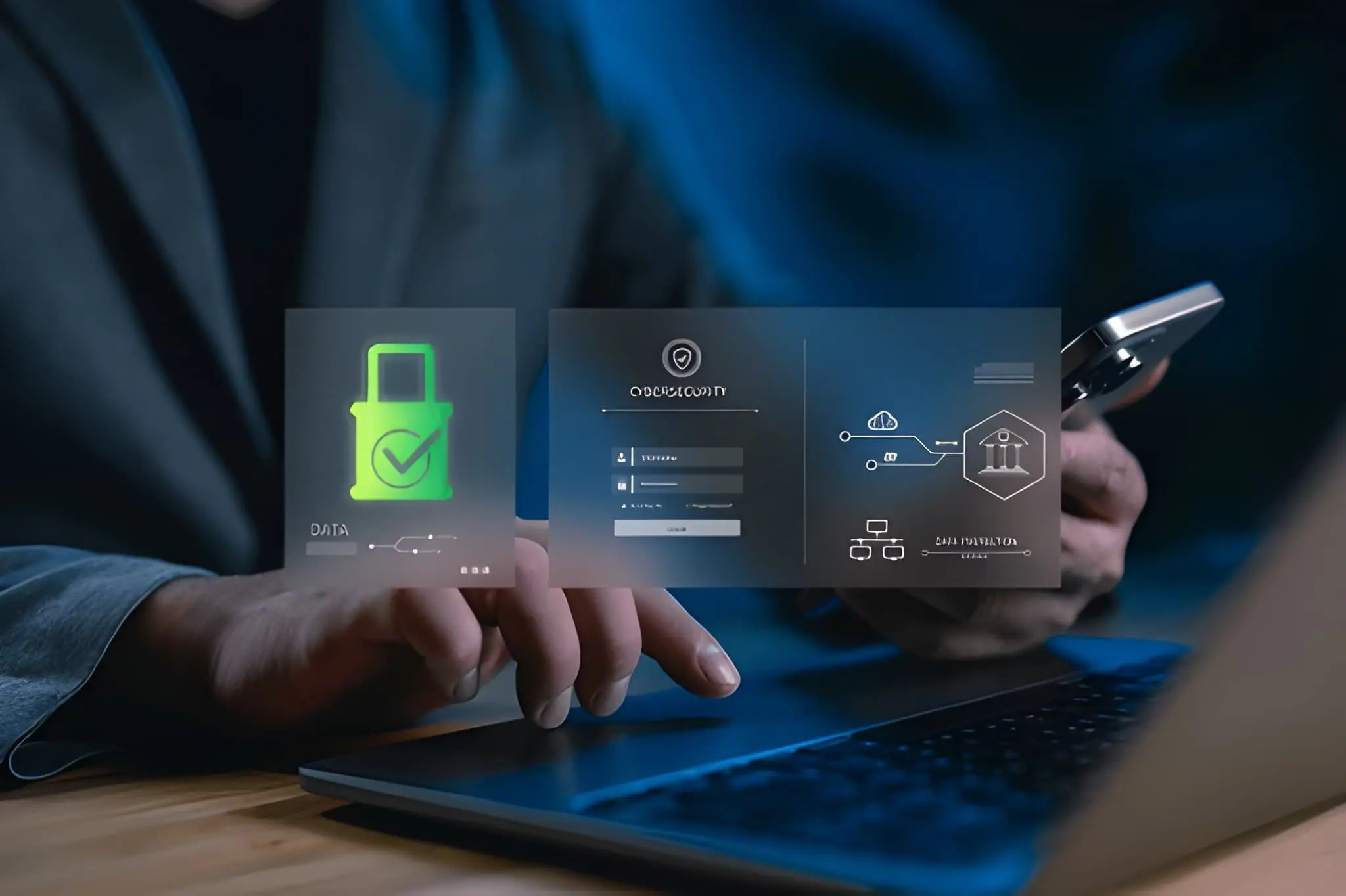
Privacy-First Architecture
With global regulations tightening, web application development has pivoted toward “privacy by design,” where data sovereignty is a core architectural pillar rather than a compliance checklist.
Core Technologies Defining the Standard
To understand how to build a modern web application in 2026, we must look at the toolchain. The era of monolithic frameworks trying to do everything is fading. Instead, we see a rise in specialized, interoperable technologies that prioritize performance and developer experience (DX).

The Evolution of Frameworks
While the giants of the past decade still hold ground, they have evolved. React, Vue, and Angular have transformed into meta-framework ecosystems. The focus has shifted from client-side rendering (CSR) to intelligent hybrid models. Server Components are now the default, allowing developers to stream HTML to the browser instantly while keeping heavy JavaScript bundles on the server.
This “HTML-first” revival, supercharged by modern hydration techniques like Resumability, ensures that applications are interactive the moment they appear on the screen.
The Frontend Revolution Hyper Personalization and Component Architecture
The frontend is where the user meets the machine, and in 2026, that meeting ground is more personalized than ever before.
Adaptive Interfaces (Generative UI)
One of the most significant modern web development trends is the move toward Generative UI. Instead of hard-coding every possible layout state, developers define constraints and design systems. AI agents within the application then assemble the interface in real-time based on the user's context, device, and accessibility needs.
For a visually impaired user, the application might prioritize high-contrast text and simplified navigation structures automatically. For a power user, it might display dense data dashboards. This fluidity ensures the application is always optimized for the individual.

Micro-Frontends and Module Federation
As applications grow in complexity, the monolithic frontend becomes unmanageable. The solution is micro-frontends breaking the UI into independent, self-contained features owned by different teams.
In 2026, technologies like Module Federation have matured, allowing these distinct pieces to share dependencies and communicate seamlessly at runtime. This architecture enables enterprise teams to deploy updates to a checkout flow without risking the stability of the product catalog, accelerating the release cycle significantly.
Backend and API Strategies for Scale
The backend of 2026 is invisible, elastic, and intelligent. The days of provisioning servers and managing capacity are largely over for modern applications.
Serverless at Scale
Serverless computing has graduated from simple event triggers to handling entire application backends. The “scale-to-zero” economy means businesses only pay for active computation. However, the real innovation is in state management. Modern serverless platforms now support stateful connections, enabling features like multiplayer collaboration and real-time chat without the need for complex WebSocket infrastructure management.

Performance and SEO: The Core Web Vitals of Tomorrow
Search engines have evolved alongside the web. They no longer just index text; they evaluate the holistic user experience.
Optimizing for Interaction to Next Paint (INP)
Core Web Vitals have tightened. The focus is heavily on Interaction to Next Paint (INP), which measures responsiveness. To score well, developers must minimize main-thread work. This involves:
- Web Workers: Offloading heavy computation to background threads.
- Selective Hydration: Only loading JavaScript for components the user is interacting with.
- Predictive Prefetching: Using AI to guess the user's next move and loading resources in advance.

Voice and Visual Search Readiness
SEO is no longer just about keywords on a screen. With the proliferation of smart glasses and ambient computing, voice and visual search are primary traffic drivers. Modern web development trends dictate that content must be structured semantically. Schema markup is critical, allowing AI assistants to parse and present your content as direct answers to spoken questions.
Security Best Practices Zero Trust and Automation
As threats become more sophisticated, security cannot be an afterthought. It must be woven into the CI/CD pipeline.
Zero Trust Architecture
The castle-and-moat security model is ineffective in a distributed cloud environment. 2026 applications operate on a Zero Trust model: "Never trust, always verify."
Every request, whether from a user or an internal microservice, is authenticated and authorized. Identity verification has moved beyond passwords to biometric passkeys and hardware-backed security tokens, significantly reducing the attack surface for credential theft.
Automated Compliance and Governance
For enterprise applications, compliance with regulations like GDPR v3 and CCPA is mandatory. Automated governance tools scan codebases and infrastructure configurations in real-time, blocking deployments that violate policy. This "Compliance as Code" ensures that security is proactive rather than reactive.
Future Outlook Preparing for the Next Decade
As we look beyond 2026, the convergence of web, spatial computing, and AI will only accelerate. We are moving toward the "Spatial Web," where applications break free from the rectangular screen and inhabit our physical environment through augmented reality (AR).
To stay ahead, organizations must foster a culture of adaptability. The tools we use today may be obsolete tomorrow, but the principles of user-centric design, performance efficiency, and robust security will remain timeless.
Moving Forward
How to build a modern web application in 2026 is a question of strategy as much as technology. It requires choosing the right abstractions, investing in the edge, and prioritizing the user at every turn.
Don't settle for mediocrity when you can aim for technology-enabled excellence. By embracing these modern architectures and methodologies, you position your organization not just to participate in the digital future, but to define it.
Sysovo is a software and mobile app development company building digital products for startups, B2C, B2B and enterprise businesses.
© 2026 Sysovo. All rights reserved.